
 EN
EN
Why Standard Breadboards Fall Short in Professional Prototyping
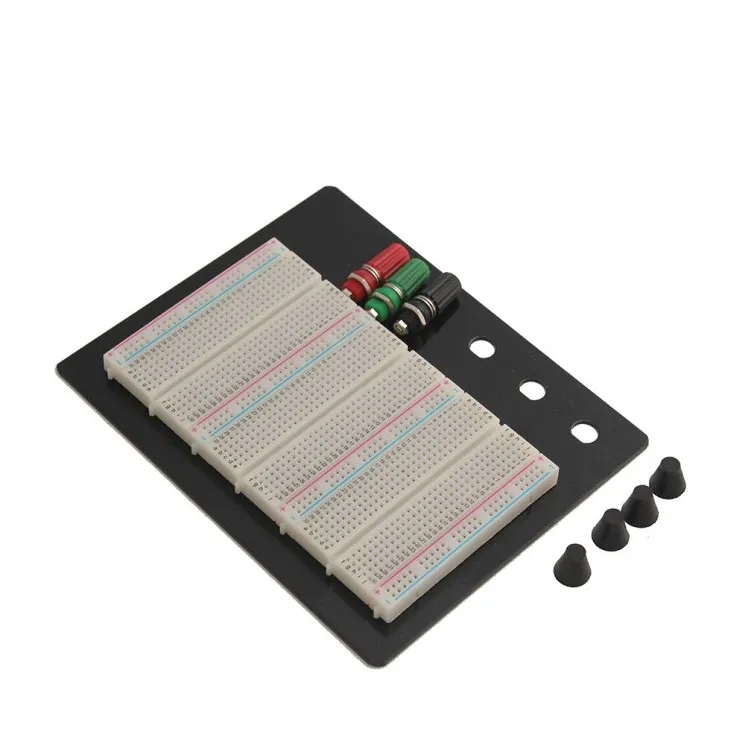
For electronics engineers and hardware startups, the standard 830-point solderless breadboard is the classic starting point. However, after 17 years of supplying protective cases to over 10,000 clients, we at Everest Case have observed a recurring pain point: a mismatch between the prototyping tool and the final deployment environment. A standard breadboard is excellent for initial circuit validation, but it becomes a liability when you need to test a sensor array in a high-vibration setting or validate a layout that must later fit into a compact, IP67-rated aluminum enclosure. This is where the concept of a custom breadboard becomes not just a convenience, but a professional necessity. Unlike mass-produced units, a custom variant allows you to integrate specific power rails, embedded microcontrollers, or non-standard footprints directly onto the prototyping platform itself.
Defining the Custom Breadboard: Beyond the Hobbyist Toolkit
A custom breadboard is essentially a tailored prototyping interface. It moves beyond the generic grid of interconnected clips. Based on our experience working with defense and industrial clients, we define it as a platform designed with a specific project’s end-state in mind. For instance, if your final product is destined for an Everest case with custom foam inserts, your breadboard should mirror that spatial constraint. This involves designing a PCB-based breadboard that places critical components—such as voltage regulators or I/O headers—exactly where they will sit in the production model. This approach, often bridging the gap between "Breadboard Production vs. PCB" as highlighted in our recent industry analysis, ensures that the electrical performance you measure in the lab is the performance you will see in the field.
Leveraging Military-Grade Standards in Your Breadboard Layout
Integrating reliability into a custom breadboard starts with material and specification choices. At Everest, our production facilities in China adhere to rigorous ISO 9001 protocols and military-grade tests, including salt spray and shock drop assessments. When advising clients on custom breadboard implementation, we recommend applying a similar rigor. For example, if your prototype requires operation in humid conditions, specify a breadboard substrate with high moisture resistance, or one that accepts conformal coating. This proactive selection prevents the common scenario where a circuit works perfectly on a standard breadboard but fails the IP68 waterproof test once inside the protective case. By treating the breadboard as a miniature production run, you validate not just the schematic, but the product's physical resilience.
Step-by-Step: From Schematic to Physical Custom Board
Transitioning from a standard prototype to a custom breadboard involves a disciplined shift in workflow. First, finalize your component selection; unlike generic boards, custom designs often utilize surface-mount device (SMD) adapters to simulate dense PCB layouts. Second, partner with a supplier who offers personal design services. Everest’s model, where personal designers translate client requirements into production drawings, is directly applicable here. You must provide the dimensional constraints of your final enclosure—for instance, the internal clearances of an Everest aluminum case—so the breadboard's mounting holes and edge clearances are accurate. Third, populate the board strategically. Leave dedicated zones for the "ugly" parts of prototyping, like jumper wires for late-stage edits, while keeping the core power distribution clean and soldered.
Case Study: Validating a Portable Field Monitor
To illustrate the custom breadboard advantage, consider a recent project from our Asian manufacturing sector. A client developing a portable atmospheric monitor needed to validate their sensor suite. The initial standard breadboard setup worked on the bench but failed during shock tests due to loose connections. We collaborated to design a custom breadboard that matched the footprint of our shock-absorbent rack mount cases. This board integrated locking header connectors and a dedicated ground plane. The result was a prototype that survived the same drop test standards as the final product. This real-world experience confirms that embedding the final mechanical constraints into the early electrical testing phase drastically reduces time-to-market and engineering re-spins.
Expert Insights: Bridging the Gap to Production
Industry experts in electronic design automation (EDA) consistently emphasize that the gap between prototype and production is where projects fail. A custom breadboard acts as the critical bridge. It provides the speed of experimentation inherent to breadboarding with the layout discipline of PCB design. As noted in our recent publication, "What a Waterproof Case Manufacturer Offers Today," the convergence of mechanical protection and electronic function is the future of B2B hardware. Therefore, when you implement a custom breadboard, you are not just building a circuit; you are engineering the first article of your supply chain. Ensure your design files are documented with the same traceability as a production PCB, allowing for seamless transition to manufacturing.
Ensuring ROI: When to Invest in Custom Prototyping Platforms
The decision to move to a custom breadboard is ultimately a question of scale and environment. For one-off educational projects, a standard unit is sufficient. However, for B2B clients facing compliance testing or harsh operating conditions, it is a high-ROI investment. By aligning your prototyping tools with your final protective strategy—such as planning for custom foam interiors or MIL-STD-810G certifications—you eliminate variables. At Everest Case, we view these custom breadboards as the electronic blueprint of the mechanical protection we provide. They ensure that when a client’s product is sealed inside our waterproof cases, it performs precisely as engineered. This transparent, experience-backed methodology is the cornerstone of trustworthy hardware development.
Table of Contents
- Why Standard Breadboards Fall Short in Professional Prototyping
- Defining the Custom Breadboard: Beyond the Hobbyist Toolkit
- Leveraging Military-Grade Standards in Your Breadboard Layout
- Step-by-Step: From Schematic to Physical Custom Board
- Case Study: Validating a Portable Field Monitor
- Expert Insights: Bridging the Gap to Production
- Ensuring ROI: When to Invest in Custom Prototyping Platforms