
 EN
EN
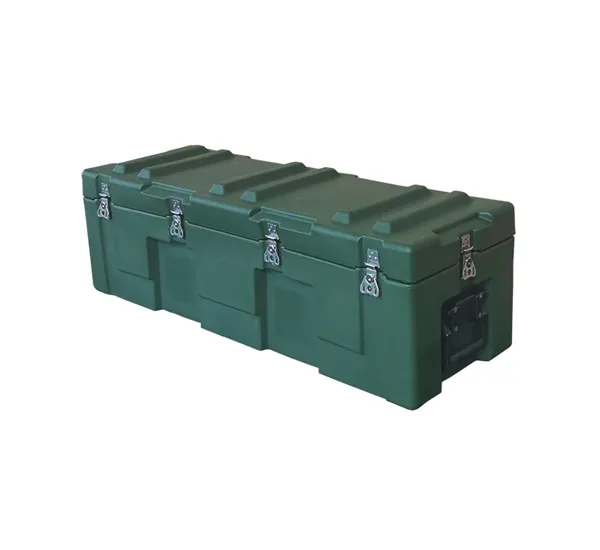
In industries where equipment failure is not an option, the packaging that protects mission-critical gear matters as much as the gear itself. Whether you are shipping sensitive electronics, military hardware, or industrial instruments, a custom rotomolded case delivers protection that standard off-the-shelf solutions simply cannot match. Drawing from real-world manufacturing experience at Everest Case, this article explores how organizations can maximize return on investment by understanding the unique advantages of rotational molding, making informed design choices, and working with an experienced partner.
Understanding the Rotomolding Process and Its Advantages
Rotational molding, or rotomolding, is a manufacturing process that creates seamless, hollow plastic products by heating and rotating a mold along two perpendicular axes. Unlike injection molding, which forces molten plastic into a closed mold under high pressure, rotomolding relies on gravity and gentle rotation to coat the inner surface of the mold evenly. This fundamental difference eliminates knit lines and molded-in stresses, resulting in a custom rotomolded case with no weak points at corners or hinges.
What makes this process particularly valuable for protective cases is the structural integrity it produces. During rotation, the plastic naturally accumulates at corners and edges while forming thinner flat walls. This self-reinforcing behavior creates an ideal lightweight yet rugged construction. The seamless, one-piece design provides excellent resistance to mechanical damage, moisture, dust, and temperature variations. For military and industrial applications where equipment must remain operational in harsh conditions, this level of protection is non-negotiable. Everest Case has leveraged this process for over a decade, delivering thousands of rotomolded cases to clients who require consistent performance in the field.
Customization Capabilities: Tailoring Cases to Your Exact Needs
The true value of a custom rotomolded case lies in its ability to be tailored precisely to your equipment and operating environment. Unlike mass-produced cases that force compromises on fit or protection, rotomolding offers exceptional design flexibility at a reasonable cost.
Interior Protection Systems. The interior of a custom rotomolded case can be fitted with custom foam inserts specifically engineered to cradle your equipment. Options range from precision CNC-cut foam that follows every contour of your product to pick-and-pluck foam for applications requiring flexibility. High-quality closed-cell polyethylene foam is commonly used, providing excellent cushioning properties while resisting moisture absorption. For applications requiring maximum protection against repeated impacts, foam-filled double-wall construction can be specified.
Exterior Hardware Integration. One of the most powerful features of rotomolding is the ability to mold hardware directly into the case structure. Metal inserts for mounting points, handles, hinges, latches, and even wheels can be captured during the molding process, creating permanently integrated features that will not loosen or fail over time. This eliminates post-molding assembly of many components, improving both durability and manufacturing efficiency.
Branding and Identification. Custom colors and permanent branding options are readily achievable with rotomolding. Graphics and logos can be embossed or debossed directly into the mold, becoming permanent markings that are part of the case itself. For applications requiring color, mold-in graphics provide another permanent option where a graphic is applied directly to the mold wall and becomes embedded in the plastic during molding.
Environmental Sealing. For applications requiring protection against water and dust ingress, rotomolded cases can achieve IP67 or IP68 ratings when properly designed. Pressure equalization valves can be integrated to allow cases to be transported by air without creating vacuum locks that make lids difficult to open.
Real-World Applications: Where Everest Case Delivers Maximum Value
Based on extensive field experience across multiple industries, Everest Case has deployed custom rotomolded case solutions in several demanding application areas:
Military and Defense. The defense sector demands cases that protect mission-critical equipment including weapons, ammunition, electronics, communication devices, and logistical gear in all conditions. Everest Case rotomolded military cases are engineered to meet or exceed MIL-STD-810 standards for drop, vibration, humidity, temperature, and altitude testing. A minimum nominal wall thickness of 6 mm in LLDPE is the industry standard for cases requiring full MIL-STD-810 Method 516 drop compliance, with thicker walls of 8–10 mm used for heavier or more fragile payloads. For example, Everest Case recently delivered a batch of custom rotomolded cases with 8 mm wall thickness to a defense contractor. These cases successfully passed independent salt spray, waterproof, shock, and drop testing, and have since been deployed in field operations across multiple theaters. Every military-grade case undergoes rigorous verification, including salt spray testing for corrosion resistance, waterproof testing for ingress protection, shock testing for impact absorption, and drop testing for structural integrity.
Industrial and Heavy Equipment. In industrial environments, equipment faces constant exposure to vibration, impacts, chemicals, and extreme temperatures. Rotomolded cases protect calibration instruments, tools, and components on construction sites, oil rigs, and manufacturing floors. Their chemical resistance to petroleum, solvents, and cleaning agents makes them particularly suitable for harsh industrial settings. One Everest Case client in the oil & gas sector reported a 40% reduction in equipment damage after switching from generic cases to a custom-engineered rotomolded design.
Broadcasting and Field Production. Broadcasters transport expensive cameras, lenses, and audio-visual equipment to inhospitable environments where equipment failure means lost programming. Rotomolded cases provide the lightweight durability required for frequent travel while maintaining the protection levels necessary for high-value gear.
Medical and Emergency Response. Medical equipment cases must protect life-saving devices while enabling rapid access in emergency scenarios. Custom rotomolded cases can be configured with modular interior systems, high-visibility colors, and specialized foam arrangements that help medical personnel locate critical equipment in seconds.
Engineering Considerations for Maximum Protection
To maximize value from your custom rotomolded case investment, several engineering factors deserve careful attention. These insights come directly from Everest Case’s design and testing protocols.
Wall Thickness Optimization. Wall thickness is a critical determinant of case durability. The rotational molding process allows engineers to specify thicker walls than are typical with injection molding. Uniform wall thickness improves load distribution and reduces the risk of localized deformation from impacts. The material naturally accumulates in corners, creating reinforced stress points exactly where additional strength is most needed. For most industrial applications, Everest Case recommends a minimum wall thickness of 5 mm, while military applications typically require 6–10 mm depending on payload weight and fragility.
Draft Angles and Radii. Proper draft angles ensure the finished part can be easily removed from the mold after cooling. Generous radii at corners improve material flow during molding, promote uniform wall thickness, and reduce internal stresses that could lead to warpage. For reinforcement ribs, good proportions include a height of approximately four times the wall thickness and a width at least five times the wall thickness. Everest Case’s engineering team uses proprietary mold design software to optimize these parameters before any metal is cut.
Material Selection. Linear Low-Density Polyethylene (LLDPE) is the most common material for rotomolded cases, offering extreme impact resistance in a lightweight design. Cross-linked polyethylene provides enhanced chemical resistance and thermal stability for more demanding applications. Each material option presents trade-offs between impact resistance, temperature tolerance, and cost. Everest Case guides clients through this selection based on their specific operating environment and drop test requirements.
Testing and Certification. Everest Case conducts a full suite of tests on every custom rotomolded case design before full production. At a minimum, this includes salt spray testing to verify corrosion resistance (per ASTM B117), waterproof testing to confirm IP67/IP68 ratings, shock testing to validate impact absorption (per MIL-STD-810 Method 516.8), and drop testing to confirm structural integrity. For authoritative reference on these standards, you can consult the official MIL-STD-810 documentation or industry guidelines from organizations like ASTM International. Everest Case’s test reports are available to clients upon request, ensuring full transparency.
Working with an Experienced Manufacturing Partner
The difference between a mediocre case and an exceptional one often comes down to the expertise of your manufacturing partner. An experienced partner brings not only technical knowledge but also practical insights gained from solving real-world protection challenges across diverse industries.
A professional manufacturer like Everest Case will guide you through each stage of development, from initial concept through design, prototyping, and full production. During the consultation phase, engineers ask detailed questions about how the case will be used, the specific environmental conditions it will face, budget parameters, quantity requirements, and any special certifications needed. Based on this information, they calculate optimal interior dimensions with appropriate clearances, determine wall thickness and structural requirements based on equipment weight and fragility, and recommend suitable materials.
Prototyping is particularly valuable for complex designs or mission-critical applications. A first-article prototype allows you to verify all specifications before committing to full production, catching any issues early when they are least expensive to address. Everest Case typically produces a single case to verify specific details before proceeding with the balance of the order. For a deeper look at Everest Case’s custom rotomolded case capabilities, [visit their product line page](https://www.everestcase.com/ [Internal Link to Custom Rotomolded Case Products] – replace with actual URL).
Conclusion
Maximizing value from a custom rotomolded case requires understanding the unique advantages of the rotational molding process, making informed design choices based on your specific application requirements, and partnering with an experienced manufacturer who can translate those requirements into a finished product that performs reliably in the field. When properly executed, a custom rotomolded case becomes not just packaging but an integral part of your equipment protection strategy—delivering durability, reliability, and peace of mind that off-the-shelf solutions simply cannot provide.