
 EN
EN
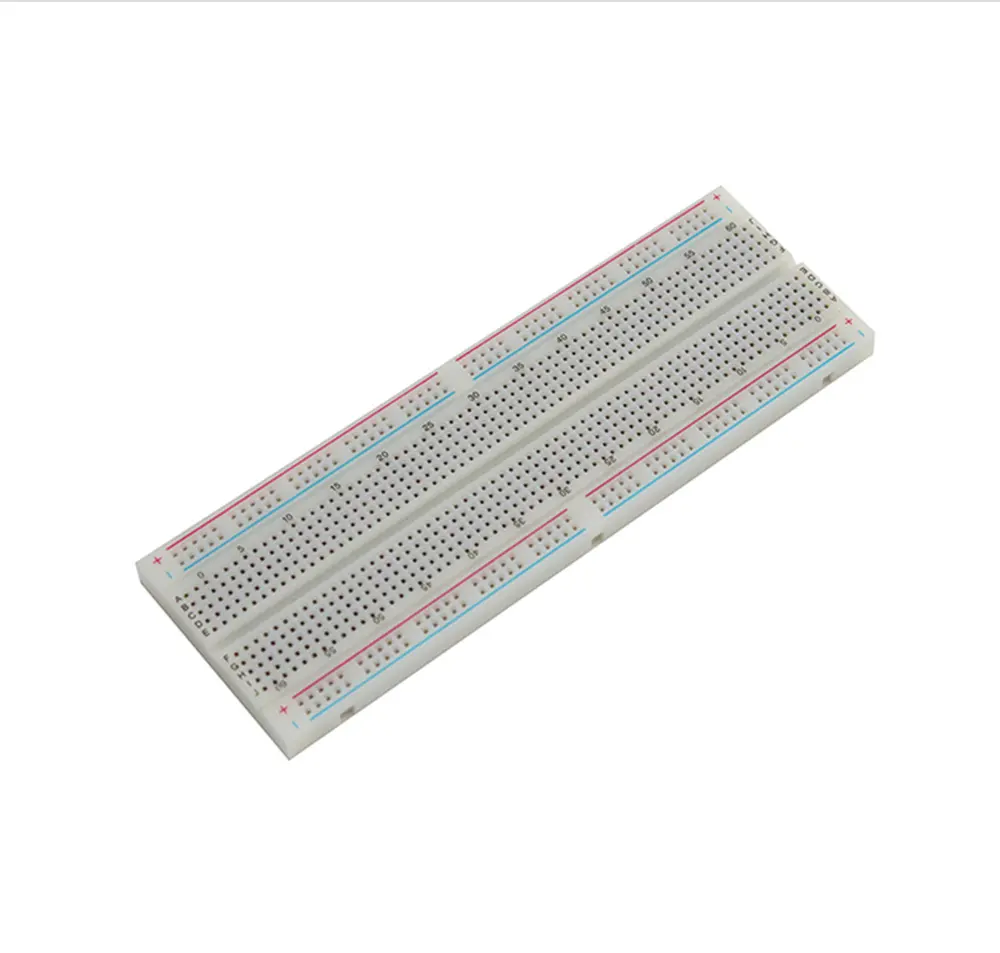
In the fast-paced electronics industry, breadboards serve as the "prototyping cornerstone" that bridges creative ideas and practical products. As a key component for rapid circuit testing and design verification, the quality and innovation of breadboard production directly affect the efficiency of electronic R&D, the reliability of product prototypes, and the overall development rhythm of the industry. Ningbo Everest Enclosure Tech Co., Ltd., founded in 2007 and boasting over 15 years of experience in manufacturing electronic supporting products, has been at the forefront of breadboard production innovation. With a 33,000-square-meter production base, a professional team of over 300 management and technical personnel, and multiple international certifications such as ISO9001 and ISO14001, Everest has integrated advanced technologies, customized services, and strict quality control into every link of breadboard production. Below, we will explore how innovative breadboard production drives the development of the electronics industry, combining Everest’s product advantages and practical cases.
Material Innovation: Laying a Solid Foundation for Reliable Circuit Prototyping
The core of high-quality breadboard production lies in the selection and optimization of materials, as materials directly determine the conductivity, durability, and stability of breadboards. Everest’s R&D team, focusing on material science, has developed a proprietary material formula for its solderless breadboards after years of experimentation and market verification. Unlike ordinary plastic substrates that are prone to deformation or aging, Everest uses high-strength, flame-retardant engineering plastics that comply with ROHS and REACH environmental standards. This material not only resists high temperatures (adapting to long-term circuit operation without melting) but also has excellent mechanical strength, ensuring that the breadboard maintains structural integrity even after repeated insertion and removal of components. Additionally, the metal contacts inside the breadboard are made of oxygen-free copper with high conductivity, which reduces signal loss and ensures stable current transmission—critical for sensitive electronic components such as sensors and microcontrollers. This material innovation has been recognized in practical applications: in the industrial electric power and electronic communications industries, Everest’s breadboards have maintained stable performance in harsh environments such as high humidity and frequent component replacement, winning trust from numerous customers.
Structural Optimization: Enhancing User-Friendliness for Efficient R&D
Breadboard production innovation is not only about materials but also about structural design that aligns with user habits and R&D needs. Everest’s solderless breadboard features a humanized structural design optimized based on feedback from electronics engineers and hobbyists. The board adopts a modular layout with clear positive and negative power rails and standard 2.54mm pitch holes, which is compatible with most through-hole components on the market—eliminating the need for users to modify components or adapters. Moreover, the internal metal clips are designed with a spring-loaded structure, providing moderate clamping force: tight enough to prevent poor contact caused by loose components, yet gentle enough to avoid damaging component pins during insertion and removal. For users engaged in complex circuit design, Everest also offers breadboards with customizable hole arrangements and panel layouts, allowing them to tailor the board to specific project requirements. This structural optimization significantly reduces the time spent on circuit assembly and debugging, enabling R&D teams to focus more on creative design—for example, in the photography industry, photographers can quickly prototype custom camera control circuits using Everest’s breadboards, accelerating the development of portable photography equipment.
Customized Production: Meeting Diverse Industry Application Needs
The electronics industry covers a wide range of fields, from outdoor exploration equipment to medical devices, and different industries have unique requirements for breadboards. Everest’s innovative breadboard production shines through its flexible customized services, which address the personalized needs of various sectors. The company offers a full range of customization options, including customized holes for special components, customized panels with marked labels, and even customized foam packaging to protect breadboards during transportation. For instance, in the fire and medical industry, where equipment requires high reliability and compact design, Everest has developed miniaturized breadboards with waterproof enclosures—integrating the breadboard with its plastic waterproof enclosure products to ensure stable circuit operation in harsh outdoor or emergency environments. In the NCP epidemic prevention survey box project, Everest customized breadboards with specific hole positions to match the electronic sensors in the survey equipment, enabling rapid data collection and transmission. This ability to provide tailored solutions has made Everest’s breadboard production a key support for cross-industry electronic innovation, breaking the limitations of standardized products.
Strict Certification and Quality Control: Ensuring Credibility in Innovation
Innovation in breadboard production cannot be separated from strict quality assurance, as unreliable breadboards can lead to erroneous test results and delay R&D progress. Everest adheres to international quality standards and has passed ISO9001 quality management system certification, ISO14001 environmental management system certification, and other authoritative certifications. In the entire breadboard production process, the company implements full-process quality control: from raw material inspection (ensuring compliance with environmental and performance standards) to precision molding (using advanced injection molds to ensure consistent hole positions), and from electrical performance testing (verifying conductivity and contact stability) to final packaging inspection. Each breadboard undergoes 100% manual sampling and automated testing before leaving the factory, ensuring that the pass rate reaches 99.9%. This strict quality control system is also the foundation of Everest’s "lifetime warranty" service commitment—users can enjoy free repair or replacement if the breadboard has quality issues due to production defects. Such transparency and reliability have made Everest’s breadboards trusted by customers in Europe, America, and Asia, and even led to German Chancellor Angela Merkel showcasing the company’s enclosures (including supporting breadboard products) in international exhibitions, demonstrating the global recognition of its quality.
R&D-Driven Innovation: Leading the Evolution of Breadboard Technology
Continuous R&D is the core driving force behind breadboard production innovation. Everest’s technical team, composed of professional R&D personnel with years of industry experience, focuses on the integration of breadboard materials, structures, and functions. The team absorbs the advantages of domestic and foreign safety protection products, conducts independent research and development, and has obtained multiple technical patents related to breadboard production. For example, the team recently developed a smart breadboard with built-in current detection functions, which can real-time monitor the current of each circuit branch and send alerts for overloads—solving the problem of hidden dangers in traditional breadboards that lack real-time monitoring. Additionally, in response to the trend of miniaturization and portability in electronics, Everest has launched ultra-thin breadboards that are 30% thinner than conventional products, while maintaining the same load-bearing capacity and compatibility. These R&D achievements not only improve the performance of individual breadboards but also promote the evolution of the entire breadboard industry, enabling breadboards to better adapt to emerging technologies such as IoT and wearable devices.
Service Upgrade: Empowering Efficient Electronic Innovation
Breadboard production innovation is not limited to product itself; it also includes service upgrades that support the entire R&D cycle. Everest understands that electronic R&D often requires rapid response and flexible support, so it has built a "lightning delivery" system—stocking a large number of breadboards in various models, configurations, and colors to ensure punctual delivery even for urgent orders. For customers with special customization needs, the company’s technical team provides one-on-one consulting services, from demand communication to solution design, and from sample production to mass production, shortening the customization cycle by 40% compared to industry averages. Moreover, Everest offers comprehensive after-sales support, including online technical guidance (helping users solve circuit connection problems related to breadboards) and on-site training (for enterprise R&D teams). This full-cycle service model allows users to focus on their core R&D work without worrying about supporting product issues, greatly improving the efficiency of electronic innovation. For example, in the equipment repair industry, maintenance personnel can quickly obtain customized breadboards from Everest to prototype temporary repair circuits, reducing equipment downtime.
Table of Contents
- Material Innovation: Laying a Solid Foundation for Reliable Circuit Prototyping
- Structural Optimization: Enhancing User-Friendliness for Efficient R&D
- Customized Production: Meeting Diverse Industry Application Needs
- Strict Certification and Quality Control: Ensuring Credibility in Innovation
- R&D-Driven Innovation: Leading the Evolution of Breadboard Technology
- Service Upgrade: Empowering Efficient Electronic Innovation