
 EN
EN
Accelerated Prototyping and Iteration with Custom Breadboard Design
How Modular Layouts Cut Wiring Errors and Reconfiguration Time
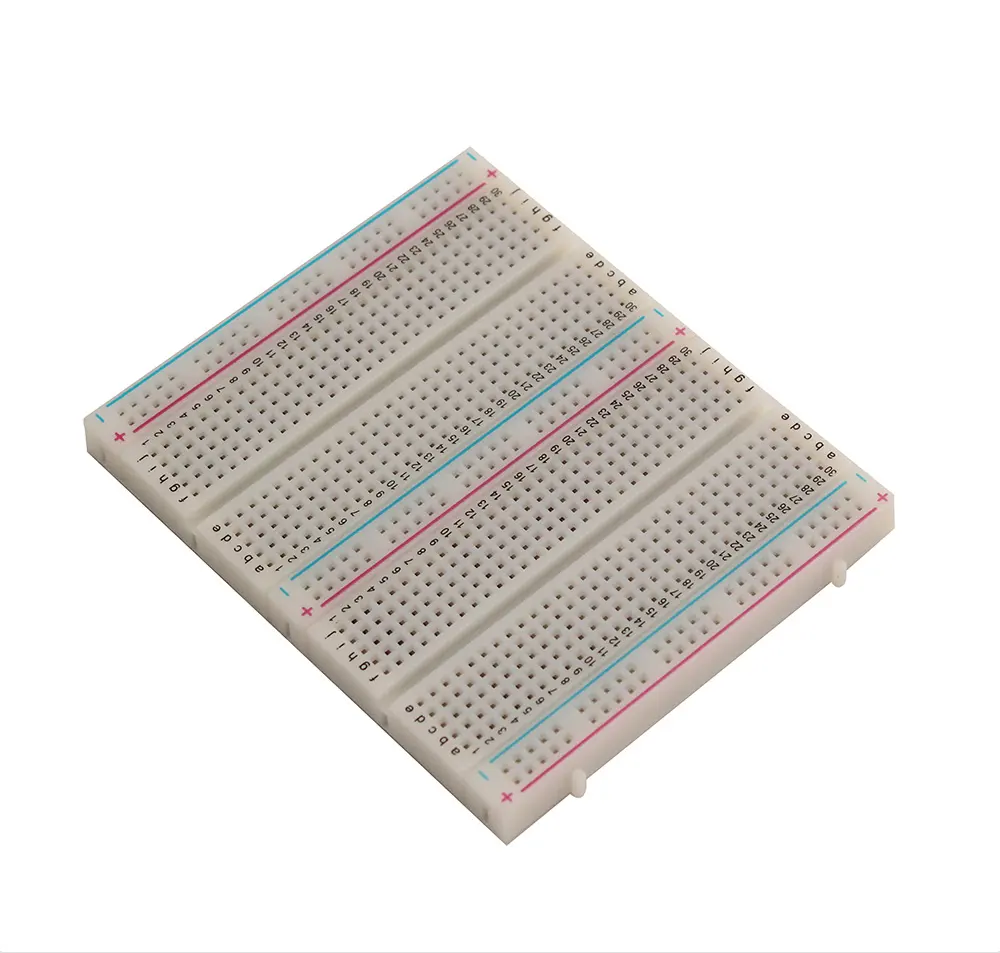
Custom modular breadboards help organize components better thanks to their built-in power rails and designated signal areas. This setup cuts down on messy wiring work by about half compared to regular boards. When working on these boards, engineers deal with much fewer connection issues since everything fits into color marked sections for different circuits. The snap in modules really cut down on those frustrating jumper wire tangles we all hate seeing. Teams can switch from one prototype to another roughly three times quicker than before. Less time wasted hunting down bad connections means big savings during testing phases, especially important when dealing with complex sensor networks or power systems that need validation fast before product launch dates.
Real-World Impact: 42% Faster Prototype Turnaround in Academic Robotics Labs
When academic robotics labs started using custom breadboards, they saw their prototype development times drop from around 14 days down to just 8 days according to a study published in Robotics Education Journal last year. The reason? Three main workflow improvements made things faster. First, standardizing where test points go lets engineers connect oscilloscopes right away instead of hunting through wires. Second, those motor driver modules can be swapped out quickly so teams don't waste time rebuilding entire systems when testing different actuators. And third, having centralized grounding planes really helps reduce interference problems in controller circuits. A university lab in Massachusetts actually managed to slash their EMI-related redesign work by nearly two thirds simply by putting RF components on shielded parts of their breadboards. This shows just how much difference proper organization makes in speeding up iterations while saving both time and money in the long run.
Cost Efficiency and Extended Reusability of Custom Breadboard Solutions
Three-Year TCO Reduction Through Standardized Power Rails and Interchangeable Modules
Building custom breadboard solutions actually saves money in the long run because they cut down on wasted components and stop people from constantly buying new parts all the time. When we use standardized power rails, everything gets a steady voltage supply throughout different projects, which means spending way less time troubleshooting problems. I've seen this myself - my team spent about 30% less time debugging when we switched from random setups to proper ones. The real game changer comes with those interchangeable modules though. Engineers can take working circuits like sensor connections or signal conditioning units and reuse them across various prototypes instead of starting fresh each time. Labs that go modular typically see their material costs drop around 44% within three years, plus they finish projects faster than before. Some university labs have cut their component orders by nearly half since moving to these reusable systems, freeing up cash for better test gear. And let's not forget about quality contacts either. Good connection points mean these boards last much longer, turning what used to be throwaway items into something worth keeping for years rather than months.
Improved Debugging and Signal Integrity in Hybrid Circuit Testing
68% Fewer Signal Integrity Issues with Integrated Test Points and Grounding Optimization
Testing hybrid circuits brings about some pretty tricky signal integrity issues, particularly when trying to mix analog and digital parts on the same platform. Regular old breadboards tend to have problems with electromagnetic interference (EMI) plus those annoying ground loops which just make things worse. This leads to all sorts of wrong readings and makes debugging take forever. That's why custom made breadboard setups are becoming popular. These special boards tackle those problems by placing test points exactly where they're needed most and setting up better grounding systems so current doesn't travel long distances back to ground. Putting probes right at key spots gives engineers a clear view of what signals are actually doing without having to stick big probes everywhere that might mess up the measurements themselves.
Star topology grounding works hand in hand with isolated power planes to stop those pesky common mode noises from jumping between different parts of circuits. According to what we see in the industry, this combined method cuts down on signal reflections and crosstalk problems by around two thirds compared to regular prototype boards out there. The benefits are pretty clear too - engineers spend way less time tracking down faults these days. When testing mixed signal designs, debugging sessions tend to shorten by about 45 minutes on average. For anyone working on serious embedded systems projects, getting reliable signals matters a lot since poor quality signals can really mess up how well everything performs in practice.
Scalability and Future-Proofing for Complex Embedded Development
Custom breadboards provide essential adaptability for evolving embedded systems, enabling engineers to scale projects without costly hardware redesigns. Modular architectures support incremental component upgrades as requirements shift—extending hardware lifespan and reducing total ownership costs by 30–45% compared to fixed-platform solutions (Embedded Systems Benchmarking Consortium, 2023).
Three core strategies ensure long-term viability:
- Expandable grid layouts accommodate additional sensors and processors
- Standardized connector systems maintain compatibility with next-gen peripherals
- Multi-voltage support zones adapt to evolving power requirements
As projects advance from prototype to production, these design principles prevent obsolescence while preserving signal integrity. The flexibility proves especially valuable in IoT and robotics applications, where sensor arrays frequently expand post-deployment. Teams using scalable breadboard solutions experience 40% fewer hardware revisions during product lifecycle development.
Future-proofing extends beyond physical adaptability. Strategic placement of test points and diagnostic lanes accelerates troubleshooting in multi-layer systems—critical when integrating machine learning modules or wireless communication stacks in later stages. By anticipating complexity growth during initial design, engineers build resilient foundations for decade-long embedded system lifecycles.