
 EN
EN
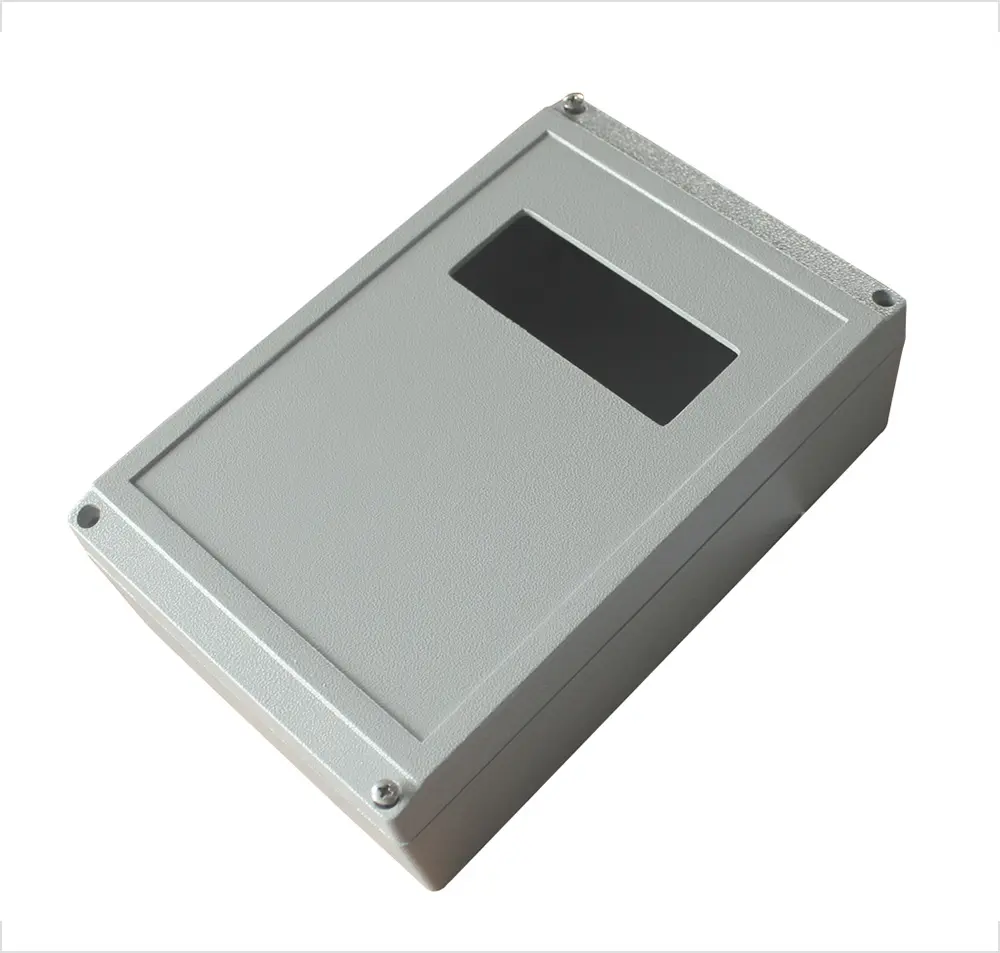
Top 3 Challenges in Aluminum Enclosure Fabrication and How a Professional Factory Overcomes Them
In the world of product design, the enclosure is far more than just a box. It is the first impression, the protective shell, and often a critical component for heat management. Aluminum has become a go-to material for enclosures across industries—from consumer electronics and audio equipment to industrial controllers and medical devices—thanks to its excellent strength-to-weight ratio, natural corrosion resistance, and superior thermal conductivity.
However, transforming a raw aluminum billet or sheet into a precision, high-quality enclosure is a complex process fraught with potential pitfalls. Choosing the right aluminum enclosure fabrication factory is not just about finding someone to cut and bend metal; it's about partnering with a team that possesses the deep expertise to navigate the inherent challenges of the material and the manufacturing process. Understanding these challenges is the first step in ensuring your project's success.
The Challenge of Maintaining Precision Tolerances During Fabrication
One of the most significant hurdles in aluminum enclosure fabrication is achieving and maintaining tight dimensional tolerances. Unlike plastic injection molding, where parts are formed in a near-net shape, aluminum fabrication often involves multiple steps: cutting, bending, welding, machining, and finishing. Each of these steps introduces the potential for error.
Aluminum, while strong for its weight, is also a relatively soft and "alive" metal. During the cutting process (like CNC machining or laser cutting), internal stresses within the aluminum stock can be released, causing the material to warp slightly. This warpage can throw off critical dimensions, making it difficult for panels to fit together perfectly. Furthermore, during welding, the intense heat creates a heat-affected zone where the metal expands and then contracts as it cools. This thermal distortion is a primary enemy of precision.
An experienced aluminum enclosure fabrication factory mitigates these risks through a combination of advanced machinery and process expertise. For instance, using stress-relieved aluminum stock is a fundamental first step. On the machining front, employing multi-axis CNC machines allows for complex parts to be created in a single setup, eliminating errors caused by re-positioning the workpiece. To combat welding distortion, skilled fabricators use techniques like tack welding before a full weld, using jigs and fixtures to hold parts in place, and employing specialized welding sequences that distribute heat evenly. The final assurance of quality comes from rigorous inspection using tools like CMMs (Coordinate Measuring Machines) to verify that every dimension meets the specified tolerance before the enclosure moves to the finishing stage.
Managing Heat Dissipation and Thermal Management Effectively
Aluminum's primary advantage—its excellent thermal conductivity—also presents a significant design and fabrication challenge. While this property is why it's chosen to house heat-generating components like amplifiers or processors, the enclosure itself becomes part of the thermal management system. The challenge lies in designing and fabricating the enclosure to efficiently move heat away from sensitive internal components to the outside environment.
This is not as simple as just making the enclosure out of aluminum. The thickness of the material, the surface area available for convection, and the interface between the heat source and the enclosure all play critical roles. A common mistake is designing an enclosure that looks sleek but acts as a thermal insulator, trapping heat inside and shortening the lifespan of the electronics.
A sophisticated fabrication partner addresses this by working closely with design engineers from the outset. They can advise on incorporating features like heat sinks directly into the enclosure design—perhaps as fins on the rear panel or a thick, flat baseplate that contacts a thermal pad from a processor. Fabrication techniques come into play here as well. For example, precise CNC machining can create perfectly flat mounting surfaces to ensure maximum contact and heat transfer between a component and the enclosure. Furthermore, the choice of finish can impact heat radiation; certain anodized coatings can improve the emissivity of the surface, helping it radiate heat more effectively. A factory with deep expertise doesn't just fabricate a box; they fabricate a thermal solution.
Achieving a Flawless Surface Finish and Aesthetic Quality
In many applications, especially consumer-facing products, the aluminum enclosure is a key aesthetic element. The challenge is that the fabrication process, which is necessary to create the part, leaves behind a trail of evidence that must be meticulously erased. Tooling marks from CNC machining, discoloration and roughness from welding, and sharp edges from cutting all detract from a premium look and feel.
Achieving a flawless finish—whether it's a brushed, bead-blasted, or high-gloss look—requires a deep understanding of both mechanical and chemical finishing processes. For instance, to prepare for an anodized finish, the surface must be perfectly uniform. Any minor scratch or imperfection from the fabrication stage will be amplified, not hidden, by the anodizing process. Hand-polishing a weld seam to be invisible is a true craft, requiring years of experience to blend the repair into the surrounding material without altering the part's geometry.
This is where the expertise of a dedicated aluminum enclosure fabrication factory truly shines. They employ a systematic approach to finishing. It starts with clean fabrication techniques to minimize defects, such as using sharp tooling and optimized machining paths. Post-fabrication, a multi-stage process is often employed. This might include tumbling or vibratory finishing for deburring, followed by skilled hand-sanding and polishing to achieve the desired surface profile. The factory's knowledge extends to the finishing itself, whether it's specifying the right type of anodizing (e.g., Type II for decorative, Type III for hardness) or coordinating with powder coating specialists to ensure the paint adheres perfectly and provides a durable, beautiful surface. They understand that the finish is not just the last step; it's the culmination of every step that came before.
Conclusion: Partnering with Expertise for Success
Navigating the complexities of aluminum enclosure fabrication requires more than just standard metalworking equipment. It demands a partner with a profound understanding of material science, precision engineering, and the subtle arts of welding and finishing. The top three challenges—maintaining precision, managing heat, and achieving a perfect finish—are interconnected and must be addressed holistically throughout the design and production process.
By choosing to work with an expert aluminum enclosure fabrication factory, you are not just outsourcing a manufacturing task; you are gaining a team of problem-solvers. This partnership ensures that your product's enclosure will not only look impressive and feel substantial but will also perform its critical protective and thermal functions flawlessly, standing as a testament to quality and thoughtful engineering.
Table of Contents
- Top 3 Challenges in Aluminum Enclosure Fabrication and How a Professional Factory Overcomes Them
- The Challenge of Maintaining Precision Tolerances During Fabrication
- Managing Heat Dissipation and Thermal Management Effectively
- Achieving a Flawless Surface Finish and Aesthetic Quality
- Conclusion: Partnering with Expertise for Success