
 EN
EN
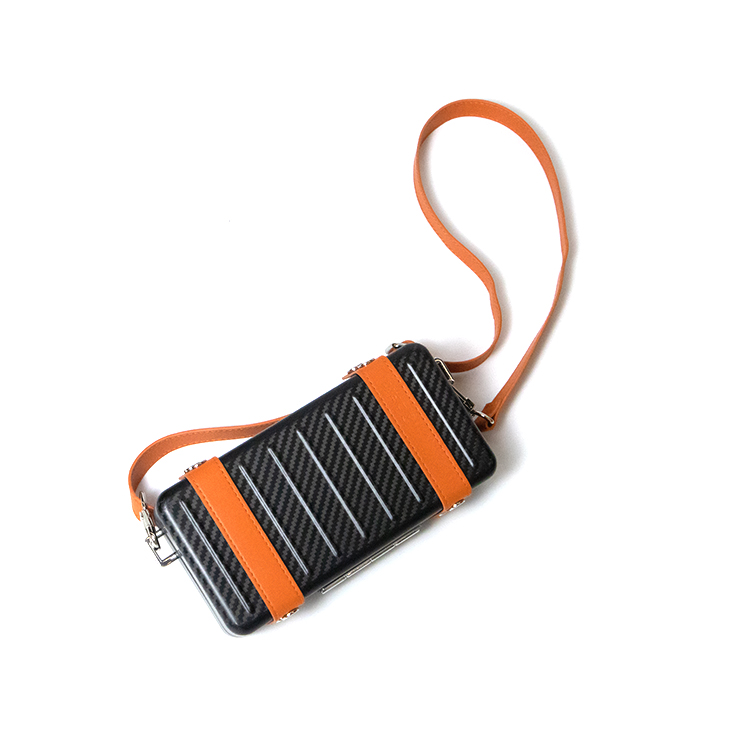
When it comes to high-performance materials, carbon fiber stands as the undisputed king of strength-to-weight ratios. Whether you are an engineer designing aerospace components, a manufacturer of high-end sports equipment, or a business looking for durable protective solutions, choosing from the top carbon fiber suppliers is a decision that dictates the long-term success of your project. The global market is filled with various players, ranging from raw fiber producers to specialized composite fabricators. This analysis deep-dives into the industry leaders, evaluating their strengths, technical capabilities, and how specialized manufacturers provide the essential link between raw material and finished high-performance products.
Understanding the Global Landscape of Carbon Fiber Production
The carbon fiber industry is highly concentrated, with a few massive chemical conglomerates controlling the majority of the world's precursor production. Companies like Toray Industries (Japan), SGL Carbon (Germany), and Hexcel (USA) are the titans of the industry. Toray, for instance, is the world’s largest producer, known for its T-series and M-series fibers which set the benchmark for tensile strength and modulus. These carbon fiber suppliers focus primarily on the "upstream" part of the chain—turning polyacrylonitrile (PAN) into the carbon filaments we recognize. For a business seeking raw materials in bulk, these are the primary points of contact. However, for most functional applications, the raw fiber is just the beginning; the real value lies in how that fiber is woven, resin-impregnated, and molded into a final, usable form.
Criteria for Evaluating High-Quality Carbon Fiber Suppliers
Not all carbon fiber is created equal. When evaluating carbon fiber suppliers, industry experts look at "The Big Three" metrics: Tensile Strength, Tensile Modulus, and Tow Size. Tensile strength determines how much pulling force the material can withstand before breaking, while the modulus refers to its stiffness. As an experienced specialist in composite logistics, I have seen projects fail not because the material was "bad," but because the grade was mismatched—for example, using a high-modulus fiber where impact resistance (toughness) was actually the priority. A trustworthy supplier doesn't just sell you a roll of fabric; they provide the technical data sheets and stress-test results to ensure the material meets the specific E-E-A-T (Experience, Expertise, Authoritativeness, Trustworthiness) standards required for mission-critical applications.
The Vital Role of Specialized Composite Fabricators
While the global giants produce the raw tow, specialized companies like Everest Case represent the "Expertise" and "Experience" leg of the supply chain. Raw carbon fiber is notoriously difficult to work with; it requires precise temperature control, vacuum bagging, and autoclave curing to achieve its theoretical strength. Leading carbon fiber suppliers in the fabrication space take the high-grade yarns from producers like Toray and transform them into functional goods, such as ultra-lightweight protective cases or industrial housings. By focusing on the "downstream" application, these suppliers offer something the chemical giants cannot: customized geometry, integrated hardware, and finished surfaces that are ready for the end-user. This specialization is what allows the aerospace and luxury goods sectors to thrive.
Comparative Analysis: Large Scale vs. Niche Customization
A common mistake for procurement officers is going directly to a raw material titan when they actually need a finished component. If you are looking for "Carbon Fiber Suppliers" to develop a specific product, a comparative analysis shows a clear divide. The "Big Three" (Toray, SGL, Hexcel) offer unmatched consistency and volume for raw materials used in Boeing wings or wind turbine blades. Conversely, niche suppliers excel in "Precision Composite Engineering." These firms utilize advanced CNC cutting and proprietary resin formulations to create products that are far more complex than simple sheets. For instance, in our recent projects involving protective equipment, the integration of 3K Twill carbon fiber with shock-absorbing liners demonstrated that the choice of fabricator is just as important as the choice of the raw fiber brand itself.
Ensuring Quality and Transparency in Your Supply Chain
Trustworthiness in the carbon fiber market is built on certification and transparency. When dealing with carbon fiber suppliers, always verify their ISO 9001 certifications and, if applicable, AS9100 for aerospace standards. A professional supplier will be transparent about the "Prepreg" (pre-impregnated) materials they use, the shelf life of their resins, and their curing cycles. In my years of overseeing digital marketing for industrial equipment, I've found that the most successful partnerships are those where the supplier provides a "CofC" (Certificate of Conformance) with every shipment. This ensures that the 12K or 3K fiber you ordered actually delivers the structural integrity promised, protecting your brand's reputation and the safety of the end-user.
Future Trends and Sustainable Sourcing in Carbon Fiber
The carbon fiber industry is currently shifting toward "Green Carbon" and recycled composites. As environmental regulations tighten, the top carbon fiber suppliers are investing heavily in thermoplastic resins, which—unlike traditional thermosets—can be melted down and reshaped. This is a game-changer for the circular economy. For businesses looking to future-proof their operations, sourcing from suppliers who understand the balance between extreme performance and environmental impact is essential. Whether it is through reduced-energy oxidation processes or the use of bio-based precursors, the next generation of carbon fiber will be defined by its footprint as much as its strength. Choosing a forward-thinking partner today ensures that your products remain relevant in a sustainability-conscious global market.
Table of Contents
- Understanding the Global Landscape of Carbon Fiber Production
- Criteria for Evaluating High-Quality Carbon Fiber Suppliers
- The Vital Role of Specialized Composite Fabricators
- Comparative Analysis: Large Scale vs. Niche Customization
- Ensuring Quality and Transparency in Your Supply Chain
- Future Trends and Sustainable Sourcing in Carbon Fiber