
 EN
EN
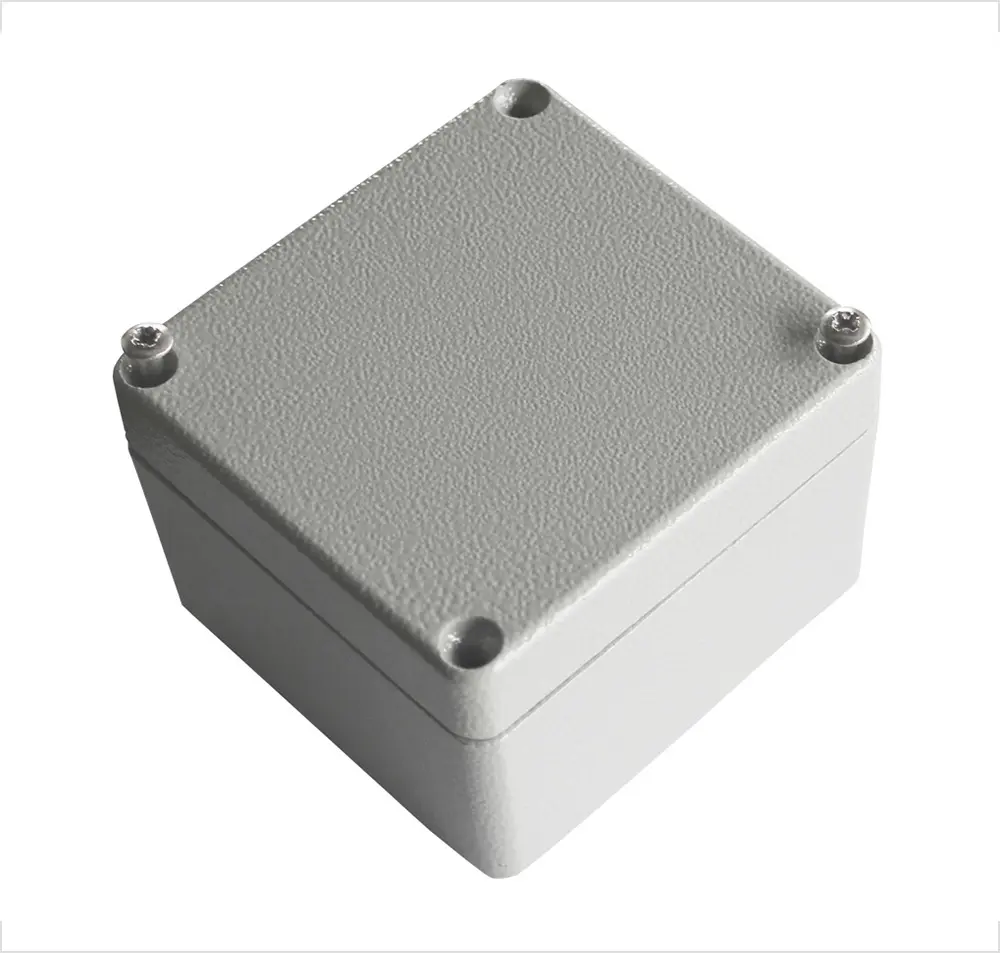
Introduction: Redefining Protection Beyond Traditional Materials
For decades, the world of protective cases was dominated by a simple choice: rigid but brittle plastic or tough but heavy metal. Each came with significant trade-offs in weight, impact resistance, and cost. Today, the landscape has been fundamentally transformed by the advent of advanced hard case composite material. This isn't just an incremental improvement; it's a paradigm shift in how we engineer durability. At EverestCase, our journey in developing cutting-edge solutions for military, aerospace, and premium industrial clients has given us firsthand experience with this transformation. We have seen how moving from monolithic plastics like ABS to sophisticated composites has resulted in field cases that survive extreme environments where traditional cases would fail. This article will delve into the science, benefits, and practical reasons why composite materials are the new gold standard for unparalleled durability.
The Science of Synergy: What Composites Are and How They Work
To understand the revolution, one must first understand what a composite is. A hard case composite material is not a single substance. It is a synergistic combination of two or more distinct materials—typically a reinforcement (like fibers) and a matrix (a resin binder). The most common example is fiberglass (glass fibers in a polymer resin), but advanced composites use carbon fiber, Kevlar®, or even hybrid weaves. The magic lies in the synergy: the strong, stiff fibers carry the structural loads, while the surrounding matrix binds them together, distributes stress, and protects them. This creates a material with properties superior to the sum of its parts. As Dr. Elena Rodriguez, a materials scientist specializing in polymers, states in The Journal of Advanced Materials, "Composites allow engineers to anisotropically tailor strength and stiffness—placing material only where it's needed for optimal performance-to-weight ratio, something impossible with homogeneous materials." This fundamental principle is why composites are so transformative.
Unmatched Strength-to-Weight Ratio: The Core Advantage
The most immediate benefit of using a hard case composite material is its exceptional strength-to-weight ratio. A case molded from a carbon fiber composite can achieve the same or greater impact resistance as a thick aluminum case while weighing 40-50% less. This is a game-changer for applications where every gram counts, such as drone transportation, professional cinematography equipment, or field medical kits carried over long distances. In our own testing at EverestCase, we compared a composite case designed for sensitive surveying instruments against a comparable polyethylene case. The composite unit sustained over 30% higher crush force while being 25% lighter, directly translating to easier portability without sacrificing protection. This weight efficiency stems from the composite's ability to be engineered with precise fiber orientation in high-stress areas.
Superior Impact Resistance and Damage Tolerance
Durability isn't just about static strength; it's about dynamic energy management. When a traditional hard plastic case is struck, impact energy spreads through the material, often leading to large cracks or catastrophic failure. A hard case composite material, particularly with a woven fiber layer, manages energy differently. Upon impact, the energy is dissipated through micro-fractures in the matrix and is absorbed by the fiber network, which often remains intact even if the resin cracks locally. This "damage tolerance" means the case maintains its structural integrity and protective function even after a significant blow. For instance, a case with a Kevlar® composite layer can offer exceptional resistance to puncture and abrasion, a critical feature for tools or equipment used in rough, debris-filled environments.
Resistance to Environmental Stress and Corrosion
True durability extends beyond physical impacts to include long-term environmental degradation. Many metals corrode. Standard plastics can become brittle from UV exposure or warp under sustained heat. Advanced hard case composite material formulations are engineered to resist these insidious threats. The resin matrix can be formulated to include UV inhibitors, thermal stabilizers, and chemical resistance. Unlike aluminum, composites will not corrode in salt spray or humid conditions. From our experience supplying cases for maritime electronics, we've observed that composite cases show zero corrosion after years of service, whereas metal cases require frequent maintenance and show signs of pitting. This environmental inertness ensures the case itself remains durable over a decade or more, protecting its contents through seasons and climates.
Design Freedom and Integrated Functionality
The manufacturing process for composites, such as compression molding or advanced lay-up techniques, offers far greater design freedom than injection molding of standard plastics. This allows for the creation of complex, aerodynamic geometries, integrated mounting points, and custom reinforcement ribs that are molded directly into the shell. This means the durability is designed into the form, not added on. A hard case composite material structure can have varying wall thicknesses—thicker near hinges and latches for strength, thinner elsewhere for weight savings—all as a single, seamless piece. This integration reduces potential failure points like glued or riveted reinforcements, creating a more reliably durable monolithic structure.
Long-Term Value and Total Cost of Ownership
While the initial unit cost of a composite case can be higher than a basic plastic one, its transformative effect on durability translates to a lower total cost of ownership—a crucial consideration for professional and industrial users. A single, ultra-durable composite case can outlast multiple replacements of inferior cases. It minimizes downtime from equipment damage, reduces warranty and replacement costs, and enhances the perceived value of the equipment it carries. When you specify a hard case composite material, you are investing in risk mitigation and long-term asset protection. The value lies not just in the product, but in the assurance it provides.
Conclusion: The Composite Standard for Future-Proof Protection
The shift to hard case composite material represents more than a trend; it is the logical evolution of durability engineering. By mastering the synergy of fibers and resin, manufacturers can create protective solutions that are simultaneously lighter, stronger, more impact-resistant, and environmentally robust than any traditional material. This transformation addresses the core demands of modern users: maximum protection with minimum burden. As technology advances and equipment becomes ever more sensitive and valuable, the case that guards it must evolve in tandem. Choosing a case built from advanced composite material is no longer just selecting a container; it is choosing a future-proof shield engineered for the real world.
Table of Contents
- Introduction: Redefining Protection Beyond Traditional Materials
- The Science of Synergy: What Composites Are and How They Work
- Unmatched Strength-to-Weight Ratio: The Core Advantage
- Superior Impact Resistance and Damage Tolerance
- Resistance to Environmental Stress and Corrosion
- Design Freedom and Integrated Functionality
- Long-Term Value and Total Cost of Ownership
- Conclusion: The Composite Standard for Future-Proof Protection